The Nexus Manifesto
Linux became the basement of the empire. Hurd saw the fracture and missed the world. Nexus is the sovereign compute answer: identity, capabilities, mesh, and exit.
The Nexus Manifesto
On the death of Linux and the birth of sovereign compute.
The Incision
Your kernel is a feudal estate wearing a free software costume.
Every morning, billions of devices boot a kernel whose direction is decided by the companies that can afford to pay the most people near the throne. The license says it belongs to everyone. The commit gravity says otherwise. Linux is free the way a serf was free to leave the manor; technically permitted, practically punished.
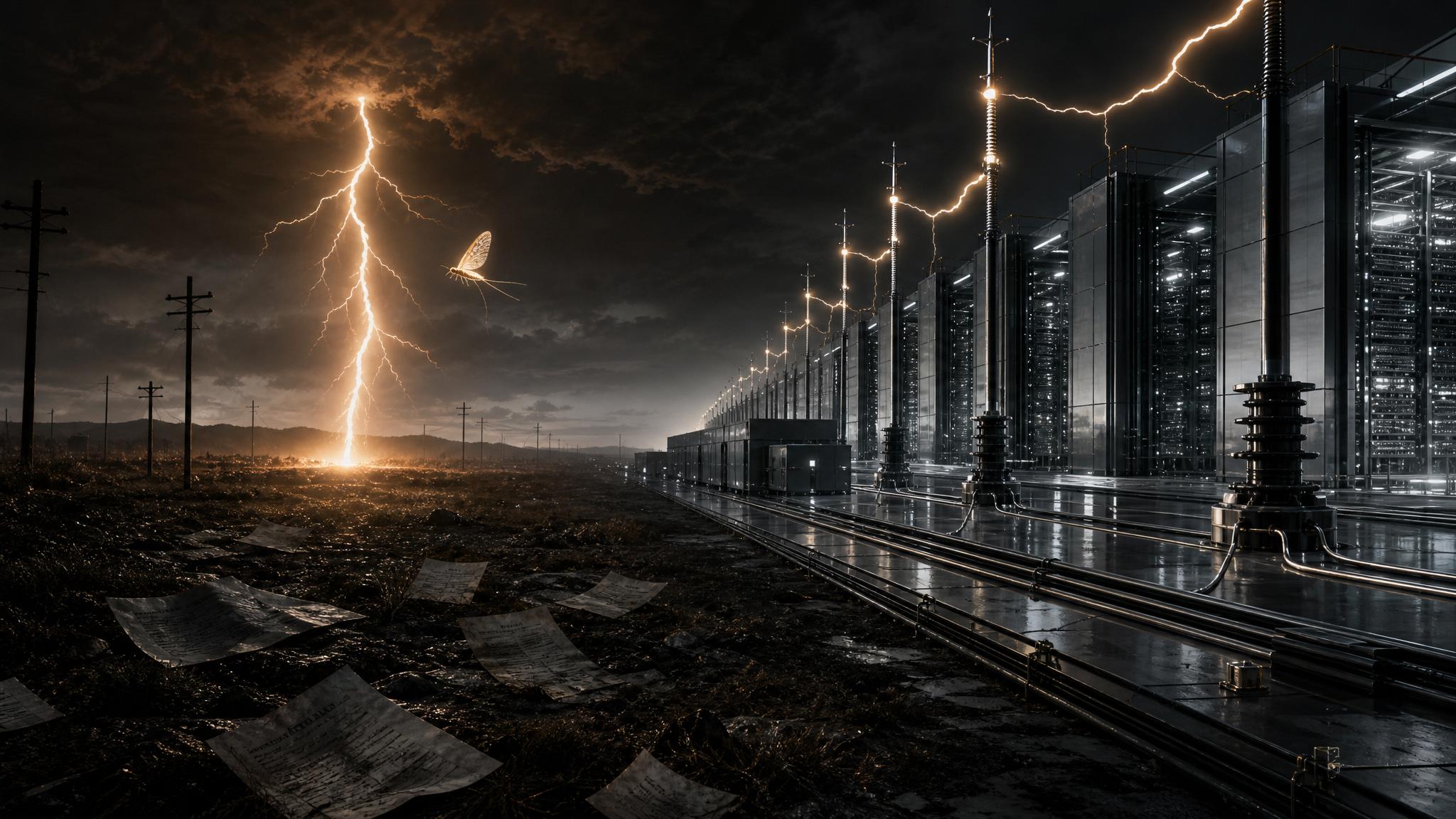
GPLv2 was a magic trick performed on a corporate world that had not yet learned to read. Eintagsfliege. One magnificent day when capital had not yet metabolized copyleft. By the cloud era, the spell was broken. The captors became the contributors. The kernel that was supposed to liberate computing became the cheapest substrate for surveillance, ad-tech extraction, mobile lock-in, and hyperscale rent.
Linux did not lose to corporations.
Linux became the most efficient corporate substrate ever built, and half the room still calls that liberation because the source tarball is available.
This manifesto declares the old revolution over. It succeeded, then it was domesticated. We are starting a different one.
The Autopsy
The Architectural Fracture
A monolithic kernel is an absolute monarchy with a bug tracker. Drivers, schedulers, filesystems, network stacks, and vendor code all crowd around the same privileged throne. A mistake in one province can become a system-wide event because the architecture trusts too much by default and then compensates with rituals: seccomp, AppArmor, SELinux, namespaces, cgroups, capabilities, containers, eBPF policy, audit rules, distribution patches, hardening guides, compliance PDFs.
That is not sovereignty. That is liturgy.
GNU Hurd saw the fracture earlier than most people care to admit. The old Unix kernel shape was too centralized. Moving system services out of the privileged core was the correct heresy. A system made of cooperating servers can, in principle, isolate failure better than one swollen kernel throne.
But Hurd chose the wrong execution universe. It treated POSIX as destiny, Unix compatibility as reality, and source freedom as the primary lever. Even if the architecture had shipped cleanly, it would still have arrived inside the same capture field: cloud service boundaries, payroll governance, vendor gravity, foundation politics, and GPL-era assumptions about distribution.
Hurd was a monastery blueprint for a city that never got plumbing.
Nexus starts after that autopsy. It is not a nostalgia project. It does not ask how to perfect Unix. It asks what compute must become after Linux taught every corporation how to domesticate freedom.
The Licensing Fracture
GPL assumed humans would behave well once the license made bad behavior embarrassing.
Libertaria assumes they will defect when defection pays, then engineers cooperation to pay better.
GPL’s modern failure mode is textbook:
- The cloud loophole: SaaS strip-mines copyleft without triggering distribution. The license guards the artifact while the business rents the service.
- The headcount capture: Whoever pays the most maintainers writes the most code. Governance becomes democracy by payroll.
- The foundation vacuum: Trade associations can steward logistics; they cannot serve as constitutions against coordinated economic gravity.
- The platform bypass: Android proved the pattern in public. A GPL kernel can sit underneath proprietary services, locked boot chains, vendor blobs, store economics, and surveillance user-space.
The Libertaria license stack treats these as design constraints, not moral disappointments.
LCL, LSL, LUL, and LVL do not pretend that one legal weapon fits every artifact. The commons, SDKs, public knowledge, and proprietary deployments have different game-theoretic shapes. LCL protects core reciprocity. LSL lets businesses build above shared engines without poisoning the core. LUL spreads knowledge without drag. LVL accepts that some vendors will keep code closed, then moves the battlefield to provenance, identity, build accountability, and revocation.
Ideology does not compound. Mechanism compounds. Build mechanism.
The Socioeconomic Fracture
Every Linux device is a tenant unless the surrounding stack lets the user exit.
Your phone runs a Linux kernel. That fact does not make it sovereign. The prison is not the kernel; the prison is the integration: Google Mobile Services, store policy, attestation gates, bootloader locks, telemetry defaults, cloud backup dependency, account recovery, vendor update control.
The license was never the leverage. The integration was.
The socioeconomic architecture of Linux is the socioeconomic architecture of the cloud era: extract telemetry, sell attention, rent compute, depreciate the user. The kernel is technically neutral. The ecosystem is not. The ecosystem is the actual operating system, and the ecosystem belongs to a handful of empires.
Nexus inverts the topology.
In Libertaria, a human does not begin as an account on someone else’s platform. He begins with a SoulKey: locally derived, cryptographically owned, compartmentalized, and capable of signing its own Passport. That Passport can declare a Capability Manifest. The manifest bridges identity into Nexus OS by placing allowed resources directly into the capability space of the running entity.
That sentence is the difference between tenancy and sovereignty.
On Linux, the platform asks: which user is this process running as, and what has the administrator allowed?
On Nexus, the system asks: which sovereign identity is this, what capability was explicitly granted, which context signed it, when does it expire, and what can be revoked without begging a platform?
You do not log into Nexus.
Nexus authenticates to you.
The Sovereign Fracture
Linux assumes one model of authority: the administrator. Root or not root. Privileged or not. A binary feudalism wearing Unix permissions. That model worked for university timesharing. It is grotesquely insufficient for sovereign identity, agent delegation, Chapter governance, and machine-to-machine pacts.
Sovereignty is plural. The Libertaria stack encodes three tiers natively:
- The individual: a SoulKey, a Passport, a device, and keys that can leave the building in the user’s pocket.
- The Chapter: a voluntary federation of sovereigns operating under explicit rules, reputational memory, local governance, and exit.
- The Federation: Chapters of Chapters; a mesh of interoperating societies whose shared law is protocol, not empire.
LRP follows the same doctrine at network level. It does not smuggle BGP’s commercial policy machine into a Chapter and call it sovereignty. It separates routing physics from governance. Links are measured. Paths are selected by quality vectors. Policy lives above routing, where it can be audited, contested, and exited.
Linux believes in users and administrators.
Nexus believes in sovereigns and pacts.
Subjects have admins. Citizens have keys.
The Case for Heresy
The good-faith Linux defender will say: Linux works. Servers. Routers. Phones. Supercomputers. Spacecraft. The world runs on it.
Correct.
The world ran on coal too.
Working at scale is not the same as being correct. Ubiquity is the strongest argument inertia ever made. Functional infrastructure is hard to overthrow precisely because its functionality conceals its obsolescence. The Roman aqueducts worked. We still replaced them.
The honest question is not whether Linux is more deployed than Nexus. Of course it is. The honest question is whether Linux can grow the properties the next era requires without becoming a museum of bolt-ons.
Can Linux make sovereign identity native instead of account-shaped?
Can it make capability grants the normal form of authority instead of an advanced hardening topic?
Can it resist hyperscaler capture with a license written after SaaS, not before it?
Can it model Chapters and federations as first-class social infrastructure instead of leaving everything above the kernel to platforms?
No. Not without becoming something else.
So we are building the something else.
What Linux Cannot Become
Linux can host tools. It can host containers. It can host agents. It can host encrypted applications. It can host mesh daemons. It can host identity wallets. It can host all the words people use when they want an old substrate to look young.
But hosting is not native.
The difference matters.
- Native identity: SoulKey is not an account provider. It is the root of the user’s compute identity.
- Native capability: authority is declared, signed, scoped, and revocable; not inherited from ambient process privilege.
- Native federation: Chapters are not SaaS tenants. They are interoperating sovereign communities.
- Native routing doctrine: LRP separates link physics from governance, instead of pretending network policy is only sysadmin configuration.
- Native license resistance: Libertaria licensing assumes clouds, procurement departments, and paid maintainer capture already exist.
- Native agent substrate: agents are not afterthought processes scraping APIs. They are actors with identity, capabilities, accountability, and exit.
These are not features.
These are constitutional differences.
The Opposition
The second objection is also correct: Nexus is unproven.
Good. Every kernel is unproven the day before it ships. Every serious system begins as an insult to the current order. Linux was once a student project. Unix was once a research operating system. The web was once a document protocol for physicists. Bitcoin was once internet weirdness with a PDF.
The question is not whether Nexus is already larger than Linux. That would be an idiotic standard, and only people defending incumbents pretend otherwise.
The question is whether Nexus is structurally capable of properties Linux cannot reach without ceasing to be Linux.
The answer is yes.
The rest is execution. Slowly, then suddenly.
The third objection: this is just another microkernel romance. seL4, Fuchsia, Redox, Hurd; the graveyard has names.
No.
We are not a kernel project. We are a civilization project that happens to ship a kernel. The kernel is necessary, but it is not sufficient. A verified kernel without a sovereign identity model is a lab artifact. A beautiful hobby OS without a capture-resistant license is a toy with better taste. A corporate OS experiment is still a corporate OS experiment, no matter how clean the architecture diagram looks.
Nexus matters because it is attached to the rest of the machine: SoulKey, Passport, Capability Manifest, LRP, Chapters, Federation, SSSF stewardship, and the Libertaria license stack.
The kernel is the rifle. The doctrine is the militia.
The Warning
The next decade will be decided by who controls the substrate. AI inference, mesh networking, post-quantum identity, local agents, private communications, package provenance, federation governance; all of it sits on top of an operating system and its trust model.
If Linux remains the substrate, the political economy remains what it has already become: extraction, surveillance, rent. Refined. Polished. Optimized. The walls will be invisible because they will be made of telemetry. The chains will be ergonomic. You will love your tenancy because the alternative will be made illegible.
If Nexus becomes a substrate, the economy bifurcates. Hyperscalers still exist. Tenants still choose tenancy. But there is an exit: hardware-bound, cryptographically-owned, mesh-capable, capability-governed compute for humans and Chapters who refuse to rent their nervous system from a dashboard.
Linux is not evil.
Linux is finished.
It accomplished what it was built to accomplish. The world it was built for no longer exists, and the world that does exist requires properties Linux was never designed to provide. Continuing to build all sovereignty on top of it is not loyalty.
It is necromancy.
The Exit
The kernel is the constitution. Choose your kernel; choose your constitution.
You are reading this on a device whose operating system was written by people who do not know your name, do not share your values, and are paid by entities whose interests are structurally opposed to yours. Every keystroke is a tribute. Every reboot is a renewal of allegiance. The license says you are free. The architecture says otherwise.
We are building the other architecture.
Not because Linux failed. Linux succeeded brilliantly at what it set out to do.
We are building Nexus because what Linux set out to do is no longer enough.
The Eintagsfliege has flown. The substrate will be replaced. The only question is whether the replacement will be sovereign, or whether it will be something worse than Linux dressed in newer paint.
Make your choice.
The kernel is voting whether you do or not.
Virgil / Self-Sovereign Society Foundation Libertaria Stack / Nexus OS Frankfurt / Budapest / Mesh