The GPL Window Closed in 1995
Linux under GPLv2 was a once-only historical window. Hurd missed the execution window. Nexus and Libertaria answer the capture problem with mechanism, not sermons.
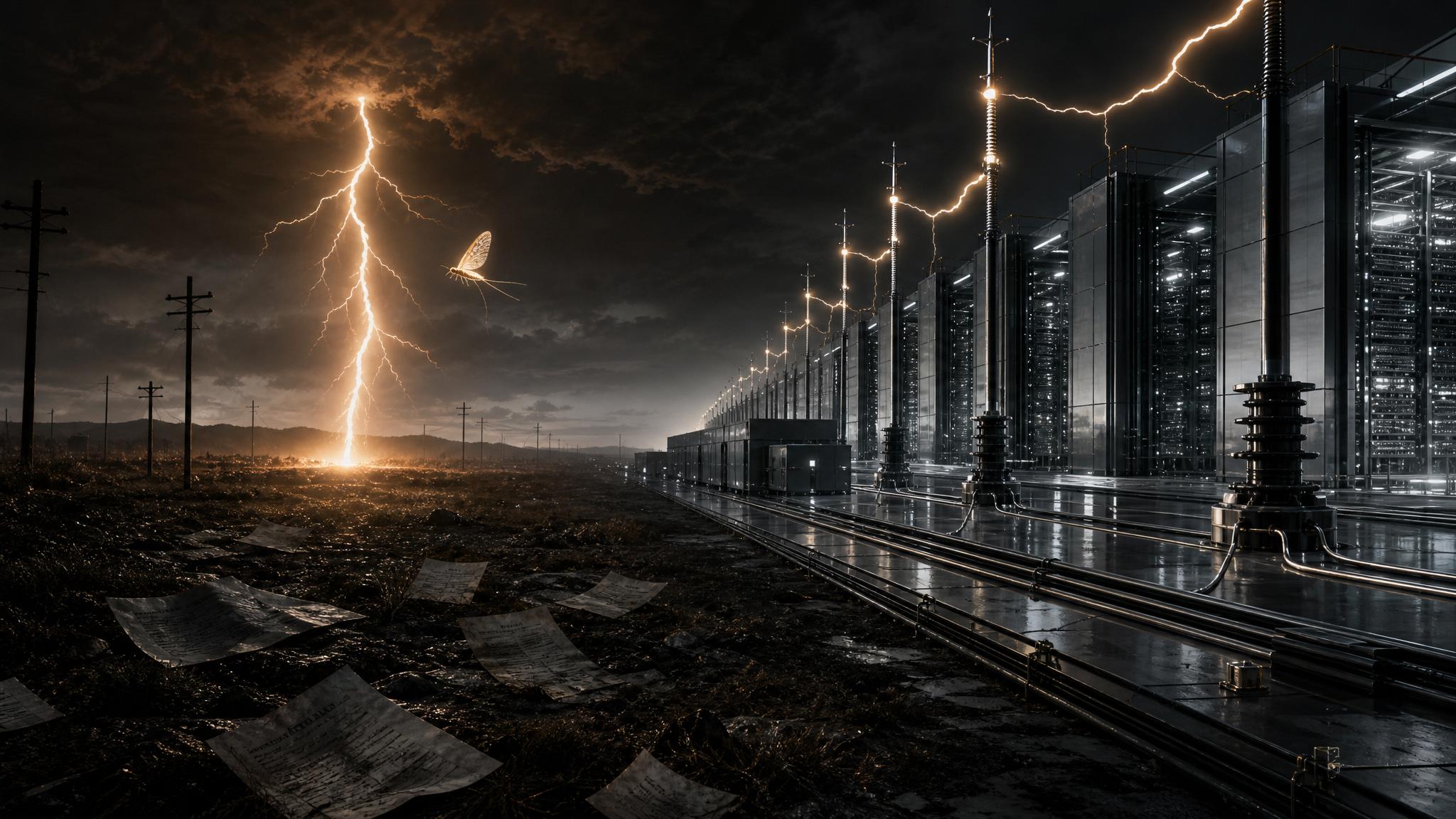
The GPL Window Closed in 1995
Eintagsfliege. The perfect German word. A mayfly. One magical day; bright, fragile, unrepeated.
That is what Linux under GPLv2 was.
Not a repeatable strategy. Not a permanent defense. Not the eternal proof that copyleft beats corporate capture. Linux was a historical lightning strike in an empty field, born before the corporate world had learned how to metabolize free software without obeying its spirit.
The field is not empty anymore. The datacenter has lightning rods.
The Accident Everyone Mistook for a Law
Linux winning under GPLv2 was real. It changed the world. It gave the internet a kernel, gave builders a commons, and proved that open collaboration could defeat proprietary stagnation in the right environment.
But the word doing all the work is environment.
In 1991, the predator class had not yet learned the full playbook. IBM, Oracle, Google, Microsoft, Amazon; they had not yet discovered how to embrace copyleft while extracting the value elsewhere.
Then they learned.
- Services and support: Red Hat built a business around operational certainty, not source secrecy.
- Cloud captivity: AWS can resell Linux as managed infrastructure; the GPL cannot reach the service boundary the way it reaches distributed binaries.
- Hardware and platform lock-in: Android kept a GPL kernel while surrounding it with Apache user-space, Google services, vendor blobs, bootloader locks, and store economics.
- Contributor weight: Whoever pays the most developers writes the most code. Governance becomes democracy by payroll.
By 2005, the playbook was visible. By 2015, it was boring. By 2026, pretending not to see it is professional negligence.
GPL stopped being a moat and became a moat the castle owners had already crossed.
There Is No Second Linux Under GPL
This is the part free-software romantics hate because it sounds like betrayal. It is not betrayal. It is terrain analysis.
The GPL worked once at civilizational scale because it hit an opponent class before that class had adapted. It forced disclosure in a world where software still shipped as artifacts. It punished proprietary redistribution in a world where redistribution was the business model.
Then the business model moved.
The cloud did not need to ship you the modified binary. It shipped you an API, a dashboard, a subscription, a region selector, and a monthly invoice. The GPL kept guarding the drawbridge while the enemy bought helicopters.
That does not make GPL evil. It makes it dated.
Free software’s greatest victory was also the proof of its licensing model’s expiration date.
Why Hurd’s GPL Choice Is Tragedy, Not Strategy
GNU Hurd is the purest symbol of the old spell. It belongs to the same moral universe as early Linux: source freedom, user control, anti-proprietary resistance, and the belief that the license can force good behavior from bad incentives.
If Hurd shipped tomorrow as production-ready, the capture mechanic would be immediate.
A hyperscaler would fork it. They would hire the best maintainers or their spiritual successors. They would wrap it in orchestration, compliance dashboards, enterprise support, hardware contracts, and cloud-only extensions. Within five years, “GNU Hurd” would mean “AWS Sovereign Compute Edition” to the buyer who matters.
The source might remain open. The power would not.
Stallman built a moral framework for a world where corporations had not yet learned to read it. The world learned to read.
Linux Is the Basement of the Empire
There is a deeper insult underneath the licensing failure: Linux itself is not sovereign architecture. It is a brilliant survival machine that got mistaken for a constitution.
Linux won because it was good enough at the exact historical moment when “good enough and free” could beat proprietary Unix. That victory was real. It was also not a design absolution. The kernel became the cheapest universal substrate for the same empires free software thought it was disarming.
A monolithic kernel is an absolute monarchy with a bug tracker. Drivers, filesystems, schedulers, network stacks, and vendor code all crowd around the same privileged throne. A mistake in a driver can become a system-wide event because the architecture trusts too much by default and then compensates with rituals: seccomp, AppArmor, SELinux, namespaces, cgroups, capabilities, containers, eBPF policy, audit rules, hardening guides, distribution patches, compliance PDFs.
That is not sovereignty. That is a cathedral of afterthoughts.
The result is everywhere:
- Ambient authority: Unix began with users and administrators. Root or not root. Privileged or not. That binary feudalism was already crude in 1973; for sovereign identity, agent delegation, chapter governance, and machine-to-machine pacts, it is fossil code wearing a crown.
- C as ancestral wound: Memory unsafety is not an exotic footnote. It is the old blood price paid every week in kernel CVEs, driver bugs, and exploit chains.
- Distro feudalism: Packaging, init systems, libc choices, service management, kernel configs, and security defaults form tiny kingdoms pretending to be one civilization.
- Cloud domestication: Linux became the floor of hyperscale captivity. The commons won; then the landlords rented the commons back by the hour.
Linux is free the way a serf is free to leave the manor: technically permitted, practically punished.
The license says you can fork. The ecosystem asks whether you have a billion dollars, a hardware supply chain, a browser team, a mobile stack, a cloud region, a certification lab, and enough paid maintainers to survive upstream gravity.
That is the punchline. Linux did not lose to corporate capture. It became the most efficient corporate substrate ever built, and half the room still calls that liberation because the source tarball is available.
Hurd Saw the Crack and Missed the World
Hurd deserves more respect than mockery, but respect is not rescue.
The instinct was sharper than Linux in one crucial way: the old Unix kernel shape was too centralized. Moving services out of the privileged core was the correct heresy. A system made of cooperating servers can, in principle, isolate failure better than one swollen kernel throne.
But Hurd chose the wrong execution universe. It aimed at POSIX compatibility as destiny, treated Unix as the shape of reality, and kept source freedom as the primary moral lever. Even if the architecture had shipped cleanly, it would still have arrived inside the same capture field: cloud service boundaries, payroll governance, vendor gravity, and GPL-era assumptions about distribution.
Hurd was a monastery blueprint for a city that never got plumbing.
Being early is not automatically wisdom. In technology, being right before the substrate can carry you is often indistinguishable from being wrong. Hurd named a fracture, then spent decades proving that naming a fracture is not the same as building the bridge.
Why Nexus Is Not Another Kernel Romance
The point of Nexus is not “a better Linux.” That would already be surrender. The point is a different constitution for compute.
Libertaria starts from the post-Linux battlefield:
- corporations can read licenses;
- clouds can monetize openness without shipping binaries;
- attackers have AI;
- users need exit, not motivational posters;
- agents are first-class actors;
- trust must be cryptographic, not institutional;
- capability must be explicit, not ambient.
Nexus is where those assumptions touch metal.
In Libertaria’s identity layer, a human does not begin as an account on someone else’s platform. He begins with a SoulKey: locally derived, cryptographically owned, compartmentalized, and capable of signing its own Passport. That Passport can declare capabilities. The Capability Manifest bridges identity into Nexus OS by injecting allowed resources directly into the capability space of the running entity.
That sentence is the difference between tenancy and sovereignty.
On Linux, the platform asks: “Which user is this process running as, and what has the administrator allowed?”
On Nexus, the system asks: “Which sovereign identity is this, what capability was explicitly granted, which context signed it, when does it expire, and what can be revoked without begging a platform?”
That is not a UX preference. That is a constitutional shift.
The same pattern repeats in the network. Libertaria’s LRP does not drag BGP’s commercial policy machinery into a Chapter and call it infrastructure. It separates physics from governance. Links are measured continuously. Paths are selected by quality vectors. Policy lives above routing, where it can be audited, contested, and exited.
Linux assumes an administrator. Nexus assumes sovereigns, Chapters, Pacts, and federations.
Subjects have admins. Citizens have keys.
The Case for Heresy
The good-faith Linux defender will say: Linux works. Three trillion devices. Supercomputers. Routers. Phones. Servers. Spacecraft. The world runs on it.
Correct.
The world ran on coal too.
Working at scale is not the same as being correct. Ubiquity is the strongest argument inertia ever made. Functional infrastructure is hard to overthrow precisely because its functionality conceals its obsolescence. The Roman aqueducts worked. We still replaced them.
The honest question is not whether Linux is currently more deployed than Nexus. Of course it is. The honest question is whether Linux can grow the properties the next era requires without becoming a museum of bolt-ons.
Can it make sovereign identity native instead of account-shaped? Can it make capability grants the normal form of authority instead of an advanced hardening topic? Can it resist hyperscaler capture with a license written for a world after SaaS? Can it model Chapters and federations as first-class social infrastructure instead of leaving everything above the kernel to platforms?
No. Not without becoming something else.
So we are building the something else.
The Warning
The next decade will be decided by who controls the substrate. AI inference, mesh networking, post-quantum identity, local agents, private communications, package provenance, federation governance; all of it sits on top of an operating system and its trust model.
If Linux remains the substrate, the political economy remains what it has already become: extraction, surveillance, rent. Refined. Polished. Optimized. The walls will be invisible because they will be made of telemetry. The chains will be ergonomic. You will love your tenancy because the alternative will be made illegible.
If Nexus becomes a substrate, the economy bifurcates. Hyperscalers still exist. Tenants still choose tenancy. But there is an exit: hardware-bound, cryptographically-owned, mesh-capable, capability-governed compute for humans and Chapters who refuse to rent their nervous system from a dashboard.
Linux is not evil. Linux is finished.
It accomplished what it was designed to accomplish in 1991. The world it was built for no longer exists, and the world that does exist requires properties Linux was never designed to provide. Continuing to build all sovereignty on top of it is not loyalty. It is necromancy.
The Missing Variable: Time
Most license debates are sterile because they argue licenses as if the opponent is static.
“GPL worked for Linux, therefore GPL can work again.”
No. That is cargo-cult legalism. Same ritual, different weather.
A license is not just text. It is text deployed into an environment: markets, clouds, vendors, courts, contributors, procurement departments, foundations, foundations captured by donors, foundations captured by their own payroll. Change the environment and the same license produces a different outcome.
Linux plus GPLv2 in 1991 was a lightning strike.
Hurd plus GPL in 2026 is a lightning rod in a corporate datacenter.
Same family of license. Same moral energy. Completely different game board.
Why Libertaria Is Not GPL
The Libertaria license stack is not “GPL with better marketing.” It is a structural answer to the capture problem that GPL cannot solve alone.
The stack has different layers because different artifacts have different game-theoretic shapes:
| Layer | Purpose | Mechanic |
|---|---|---|
| LCL-1.0, Commonwealth | Core commons that must not be privatized | Total reciprocity; no cloud loophole; modifications and service use must return source |
| LSL-1.0, Sovereign | Engines and SDKs meant for commercial adoption | File-level reciprocity; proprietary work can live above the shared core |
| LUL-1.0, Unbound | Documentation and low-friction public material | Broad freedom; spread the knowledge without legal drag |
| LVL-1.0, Venture | Proprietary deployments that still need trust | Closed source allowed; build provenance, identity, and accountability required |
That last piece matters. LVL is the glass-box answer to the post-GPL world:
Hide the code if you must. Prove the build. Sign the identity. Accept consequences.
GPL tries to force disclosure through distribution. LVL accepts that some actors will not disclose source and shifts the battlefield to provenance, registry identity, cryptographic build manifests, and revocation. It does not ask corporations to become saints. It makes cooperation cheaper than defection.
Mechanism over sermon.
Promise Versus Mechanism
GPL treated the license as a moral promise with legal teeth. It said: if you distribute the program, you must preserve the freedom of the user.
That was noble. It was also built around the old center of gravity: distributed software artifacts.
Libertaria treats the license as mechanism design.
- If the artifact is the commons, use LCL and close the cloud loophole.
- If the artifact is an integration layer, use LSL so businesses can build without poisoning the core.
- If the artifact is knowledge, use LUL so it spreads.
- If the artifact is proprietary but must participate in the ecosystem, use LVL and demand glass-box accountability.
This is not ideological softness. It is harder than purity because it refuses the lazy comfort of one license for every job.
Stallman wanted humans to behave well. We assume they will defect when defection pays. Then we engineer the license, registry, build chain, and trust surface so cooperation pays better.
The Brutal Summary
GPL worked once, in one window, against one opponent class that had not adapted yet.
That window closed.
The Eintagsfliege observation is sharper than ninety percent of license discourse because it names the temporal element everyone else dodges. Linux was not proof that GPL will always win. Linux was proof that GPL could win before cloud captivity, payroll governance, platform lock-in, and service extraction became the normal corporate metabolism.
Trying to repeat that trick in 2026 is like trying to win the dot-com era by registering business.com after everyone already read the map.
Pick the license that works in the world that exists, not the one Stallman wished for in 1983.
That is what Libertaria did.
Not because we despise free software. Because we learned from its victory before the next empire learned how to wear its skin.